
Employee benefits for roofing contractors,made easy.
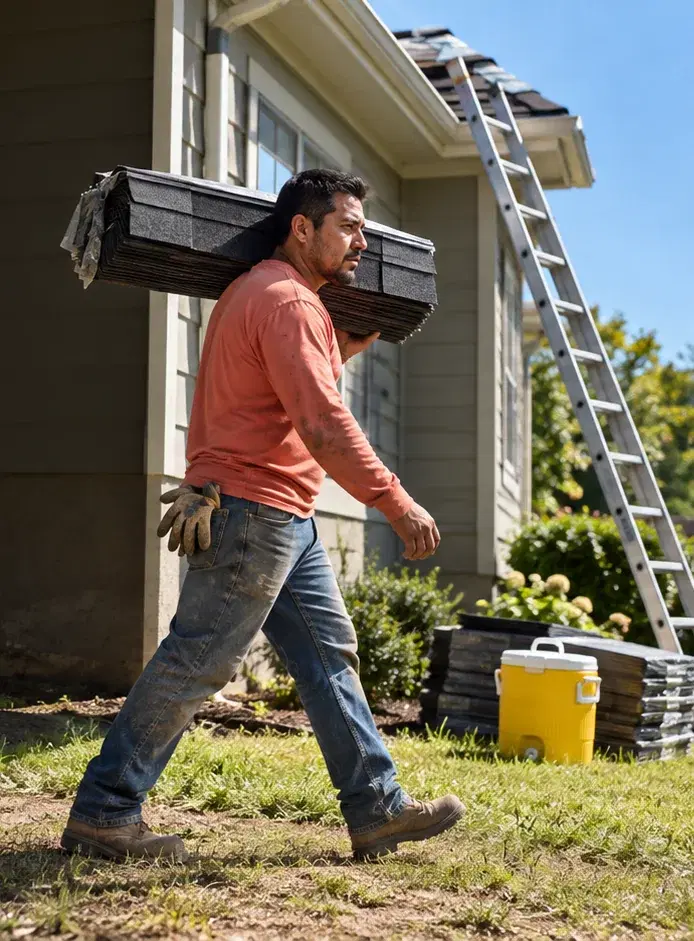
91% of U.S. roofing contractors have fewer than 20 employees.
You want great benefits for your team. You don’t have the time or the resources to get them.
That isn’t on you. For decades, the benefits industry has been built for big companies, and small businesses have been left to figure it out alone. Cakewalk was built for you.
How it works
You run your business. We handle the benefits.






Tell us about your business.
Start with your business name. We fill in what we can find. Connect payroll and your team comes with it.
Hundreds of options. One tailored package.
We compare hundreds of plans for your team. You get one package, priced and ready to adjust.
We get your team covered.
We invite your team. You see who has started. Each person gets help choosing. Everyone is covered.
Benefits admin. Off your plate.
New hires and departures sync from payroll. Each employee gets a benefits wallet. Their questions come to us, not you.
Your benefits team. On the house.
You pay for coverage. Insurance carriers pay us a commission, so we can handle everything from building your package to supporting your team year round, at no cost to you.
Roofing at a glance
Offering benefits to a roofing crew
Demanding, seasonal work with crews that other contractors are trying to hire. Here’s what shapes a benefits plan for a roofing company.
- of U.S. roofing contractors have fewer than 20 employees
- 91%
- openings a year projected for roofers, 2025–2035
- 12,000
A physical job
Roofers had 48.7 fatal work injuries per 100,000 full-time workers in 2024, the highest of the building trades BLS lists, against 3.3 for all workers. Life insurance and income protection are worth a close look.
Sources: BLS Survey of Occupational Injuries and Illnesses, 2024; BLS Census of Fatal Occupational Injuries, 2024
Winter and seasonal crews
In northern states, roofing can slow in winter. If seasonal workers take you over 50 full-time employees for 120 days or fewer, you still aren’t a large employer.
Sources: BLS Occupational Outlook Handbook: roofers; IRS: applicable large employers
Subcontracted crews
Whether a subcontracted crew member is really an employee follows the IRS’s common-law test, and offering insurance is evidence of an employee relationship.
The 30-hour line
Federal rules treat an employee who averages 30 or more hours a week as full time. A plan bought through the SHOP marketplace has to be offered to every full-time employee, but not to part-time staff.
Sources: IRS: identifying full-time employees; HealthCare.gov: who qualifies for SHOP
Benefits are your choice under 50
Employers with fewer than 50 full-time employees, counting full-time equivalents, aren’t subject to the federal requirement to offer coverage. Offering benefits is a decision you make for your team, not a mandate.
Source: IRS: applicable large employers
The small business tax credit
The federal credit can cover up to 50% of premiums for employers with fewer than 25 full-time equivalent employees and average wages under $68,200 in 2026, if you pay at least half of employee-only premiums and buy through the SHOP marketplace. Owners and their families don’t count toward the totals. SHOP plans aren’t offered everywhere, so check your state’s guide.
The whole benefits package.
Medical, dental, vision, life insurance, and income protection. Built around your business and the people who power it.
Start with your team’s needs and your business’s budget. Explore medical coverage online, or work with a benefits advisor to understand your options and choose your next step.


Questions roofing owners ask.
A group plan covers employees, generally the people you pay on a W-2. Independent contractors buy their own coverage, through the Marketplace for example. Whether someone is a contractor follows the IRS’s common-law test.
Tell us about your crew.
We’ll follow up to learn about your business and walk you through your options. There’s no cost to work with us.
Prefer to start on your own?